Nanotubes, wearables, and STEM gender gap – weekly wrap-up
Quick rundown of things you may have missed last week: Information gathered by
Ants, it turns out, are extremely good at estimating the concentration of other ants in their vicinity. This ability appears to play a role in several communal activities, particularly in the voting procedure whereby an ant colony selects a new nest.
Original news release was issued by American Technion Society, written by Kevin Hattori.
The segment of wearable technology is booming, but if you’re actively using a smart watch, you are producing more data than you are probably aware of. Data that hackers find very attractive. When we say that wearables are booming, it is not an overstatement. It is reportedly already producing an estimated $14 billion in sales worldwide – and is expected to to more than double within the next four years.

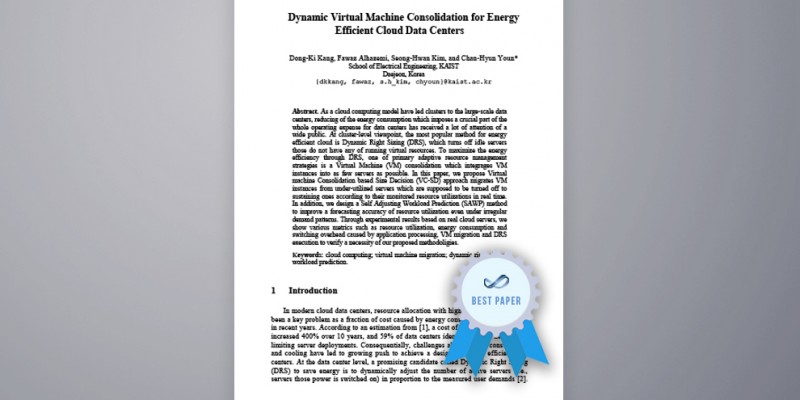
‘Dynamic Virtual Machine Consolidation for Energy Efficient Cloud Data Centers’ by Dong-Ki Kang,
Alzheimer’s disease is really tough to diagnose. More specifically, it is tough to diagnose at an early stage, when something can still be done to slow it down. Currently, MRI is employed to detect early forms of dementia, such as mild cognitive impairment (MCI), but we have been unable to effectively distinguish them from Alzheimer’s disease until after brain tissue has suffered irreversible damage.
Original news release was issued by the University of Southern California, written by
Quick rundown of things you may have missed last week: 3D printed kidney
Simple and repetitive – that is in basic terms the description of an entry-level
Unless you are knee-deep in the industry, you are most likely unaware of just how important helium is. Much like other fossil fuels, it is gathered from Earth, but it has never been found intentionally. The helium in our reserves comes from small pockets that we have find accidentally, and these reserves are quickly running out.